Shave & Stuff
- 2.9
- Rating
- 1.00M
- Installs
- Free
- Price
 Analysis by App-foxy
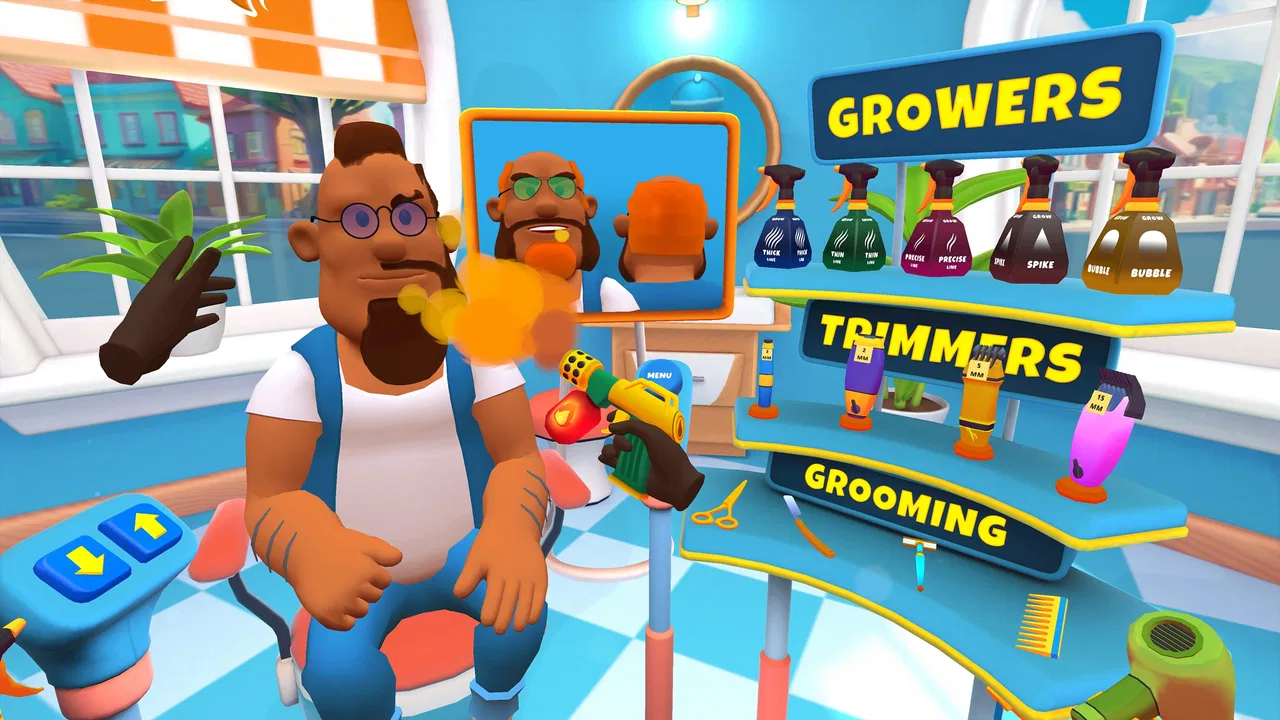
I approached Shave & Stuff expecting a light simulation game, but its appeal is more hands-on than the short store label suggests. Instead of managing a salon from a distance, I spend my time performing grooming work directly: shaping hair, working through fades, handling shaves, and moving into tattoo-focused tasks. That physical involvement is the reason a session can feel satisfying even when I only have a few minutes to play.
The game comes from Ant Hill Games and sits in the simulation category. It is free to start, aimed at players aged Everyone 10+, and requires Android 7.0 or later. The current version is 1.28.1. Those details make it easy to try on an older compatible phone, although the overall experience is best suited to someone who enjoys repeated, simple tasks rather than a deep management game with a long story.
My overall impression is mixed but fairly clear: the core loop is easy to understand, tactile, and occasionally relaxing, yet the experience can also feel repetitive and less polished than its strongest moments suggest. The average rating of 2.9 from around 1.4 thousand ratings reflects that divided reaction. With over 1 million installs, it has clearly reached a sizable audience, but popularity alone does not make it the right choice for every simulation fan.
You May Also Like

 Blood Strike: 2.5 Anniversary
Blood Strike’s Loadouts Turn Every Drop Into a Tactical Gamble
A close look at Blood Strike’s custom loadouts: how fast access to signature weapons reshapes its battle royale rhythm, rewards preparation, and narrows the gap between fights.

 Pandora - Music & Podcasts
Pandora’s Music Is Easy to Start, but Harder to Recover
Pandora’s strength is its low-effort path from a seed to a station. Its weak spot is how much confidence it asks you to place in connection, setup, and quiet recovery.

 8 Ball Pool
 Is Built on Rivalries, Rematches, and Routine
A close look at the rivalries, rematches, shared routines, and unanswered safety questions that turn a quick pool match into a persistent mobile community.

 Samsung Music
’s Quiet Strength Is Playing What You Already Own
Its reach comes less from spectacle than from dependable access to a personal library. That simplicity is both the app’s strongest retention engine and its ceiling.

 AccuWeather: Weather Radar
AccuWeather Review: A Quick, Clear Forecast for Everyday Decisions
For everyday plans, the best forecast is the one you can understand quickly. AccuWeather makes rain timing, radar, and local conditions easy to act on, with a few trade-offs.

 Hill Climb Racing
Why Hill Climb Racing Still Turns Crashes Into One More Run
A tiny car, a bumpy hill and one more upgrade: Hill Climb Racing keeps resurfacing because its simple chaos makes every near-miss feel personal.
More From Our News Desk
View All News


How the grooming loop works in practice
I find the grooming loop easiest to enjoy when I treat each client as a small visual problem rather than trying to finish as quickly as possible. In this section, I’ll focus on how the hands-on actions shape a session and where a little patience can make the result feel more deliberate. That also sets up the practical question of how to respond when an interaction feels less smooth than expected.
The first action is immediate and easy to read
The best thing about the opening interaction is that I do not need a long tutorial explanation to understand the basic idea. I look at the customer or character in front of me, choose the grooming task, and begin working through the visible hair or facial-hair problem. The game communicates progress through what I am doing on screen, so the first few actions feel more like learning by touch than studying instructions.
That matters because a barber simulator can become frustrating if the controls are vague. Here, the attraction comes from watching a rough starting appearance change as I make deliberate passes. A haircut is not just a menu selection; it is a small sequence of actions. I start with the obvious unwanted hair, refine the shape, and pay attention to the result before moving on. The same basic principle makes fades and shaves more engaging than a simple “complete” button would be.
I found it useful to avoid rushing the first pass. When I try to remove everything quickly, I lose the sense of control that makes the game enjoyable. A slower approach gives me time to see how the style is developing and reduces the feeling that I am merely sweeping across the screen until an invisible requirement is met. This is one of the first practical tips I would give a new player: treat the initial cut as preparation, not the finished job.
The tattoo side adds a different mood to the same general fantasy of working on a client. It broadens the game beyond haircuts and shaves, which helps prevent the opening minutes from feeling completely one-note. I would not describe it as a full professional tattoo simulator, though. Its value is in the quick, accessible interaction, not in reproducing every decision a real barber or tattoo artist would make.
Why the feedback rhythm keeps me playing
The most important part of the experience is the feedback rhythm. I take an action, see the appearance change, receive some sense of progress, and then decide what needs attention next. That rhythm is simple, but it gives each client a small before-and-after story. The starting condition creates the problem, my movements provide the solution, and the finished look acts as the payoff.
When the result looks cleaner after a few careful actions, the response feels immediate enough to encourage another pass. I do not have to wait for a long calculation or navigate several management screens before knowing whether I am moving in the right direction. That direct response is why the title works better as a tactile salon activity than as a traditional business simulation.
There is also a useful distinction between completing a task and doing it in a way that feels visually convincing. Even when the game is forgiving, I naturally begin checking edges, transitions, and the overall balance of the style. A fade, for example, is more interesting when I think about how the sections blend rather than simply removing a large amount of hair. The game does not need to lecture me about technique; the visual result encourages me to experiment.
That said, the feedback is not always as precise as I would like. Some actions can feel broad, and the game may not communicate every small mistake with the clarity of a dedicated skill game. This creates a trade-off. The forgiving design makes the title approachable for casual players, but it also means experienced players may eventually want more exact control, stronger grading, or more meaningful consequences for an imperfect job.
Small workflows that make sessions smoother
I get better results when I separate each job into stages. First I remove the obvious bulk, then I shape the main outline, and only after that do I refine the transition or surface. This workflow prevents me from repeatedly undoing the effect of earlier movements. It also makes the screen easier to read because I am solving one visual problem at a time instead of trying to perfect everything immediately.
For shaves, I prefer short, controlled movements rather than one long sweep. That approach makes the action feel more deliberate and gives me a chance to notice whether the remaining area needs another pass. For haircuts, I look at the whole head after each major change instead of focusing on one small patch. A close-up action can look correct while the overall style becomes uneven, so stepping back mentally is surprisingly important.
Another useful habit is to stop when the result is already convincing. The temptation in a grooming game is to keep correcting until every area has been touched, but extra actions can make a finished look less coherent. I found that restraint is sometimes more valuable than speed. This is a non-obvious strength of the loop: it rewards visual judgment, even if the game itself remains simple.
The reward is the transformation, not just the completion
The immediate reward is seeing the client change from unfinished to groomed. That transformation carries more weight than a conventional progress bar because I can judge it with my own eyes. A successful session feels like I have produced something, not merely cleared a task from a list.
There is a pleasant moment when the final rough patch disappears and the style becomes readable. That is the point at which I understand why another session is tempting. I am not necessarily chasing a complicated narrative objective; I am chasing the next clean transformation. The reward is modest, but it arrives quickly and consistently enough to support short play sessions.
For someone who enjoys organizing, decorating, or cleaning games, this same satisfaction may feel familiar. The difference is that the work is more active. Instead of placing objects or waiting for an upgrade, I am directly interacting with the character’s appearance. Players who like before-and-after tasks will probably understand the appeal immediately.
However, the reward structure is also where the limits become visible. A visual transformation can remain satisfying for only so long if the underlying actions do not gain enough variety. Once I have learned the most comfortable way to approach a haircut or shave, later jobs can begin to resemble repetitions of the same pattern. The tattoo content helps widen the range, but it does not completely remove that concern.
Free access and the point where spending matters
The game is free, which makes trying the core idea straightforward. It also includes in-app purchases priced at $3.49 per item. That is worth keeping in mind before settling into a long play routine, especially if you prefer games that present their full progression without asking for additional purchases.
I would approach the purchase system as a decision about convenience or extra content rather than as a reason to install the game. The free entry is the main advantage: I can test whether the grooming actions feel satisfying on my device before spending anything. If the controls do not click during the first sessions, paying will not solve the basic issue that the loop may simply be too repetitive for my taste.
For a child using a family device, the Everyone 10+ rating is a useful general guide, but I would still let an adult handle purchase decisions. The rating makes the game broadly approachable, while the presence of paid items means the usual store-account precautions remain sensible.
What happens when a session resets
The reset is central to the game’s design. After I finish one client, the work is effectively complete and the next job becomes the fresh starting point. That reset removes the pressure of maintaining a complicated salon over many hours. I can play, complete a transformation, and leave without worrying that I have damaged a larger campaign.
This structure works particularly well in everyday situations. If I am waiting for a train, taking a short break, or relaxing before bed, I can open the game and focus on one grooming task. The action-feedback-reward sequence has a natural stopping point, so I do not need to commit to a long uninterrupted session. That is more convenient than a management simulator that expects me to remember several resources, timers, or staff decisions when I return.
The same reset can feel limiting if I want a persistent world. I do not play this primarily to build a recognizable barbershop, develop a character, or make strategic choices that change the business over time. The satisfaction is located inside each individual job. Once that job is finished, the emotional investment largely resets as well.
That distinction helps answer an important question: is this a salon-management game? In my experience, it is better understood as a hands-on grooming simulator with a repeating client workflow. Anyone looking for staffing, pricing, furniture placement, or a detailed business economy should choose a more management-focused alternative. Anyone who wants to perform quick visual makeovers may find this format much more accessible.
Where it fits among other simulation games
Compared with idle salon games, this one gives me more to do moment by moment. Idle alternatives are often about upgrading equipment, collecting income, and checking progress occasionally. Here, the main pleasure comes from the action itself, so the game feels more like a small interactive craft than a passive business dashboard.
Compared with realistic professional simulators, it is lighter and easier to enter. I do not need to understand real barbering technique to begin, and the short task structure reduces the learning burden. The trade-off is depth. A more serious simulator would likely offer finer control, stronger technical demands, and a greater sense that every decision has lasting consequences.
It also differs from makeover games that rely mostly on choosing from preset styles. The appeal here is the process leading to the result. If I enjoy watching a character change but do not care how that change is produced, a menu-driven makeover title may be faster. If I want the satisfaction of making the change myself, the grooming actions are the stronger reason to choose this game.
Who will enjoy it, and who should skip it
I would recommend giving it a try if you like tactile simulation, quick before-and-after tasks, and games that can be played in short bursts. It is especially suitable for players who enjoy cleaning, restoration, makeover, or service-work loops but do not want a demanding strategy layer. The free entry also lowers the risk of testing the controls for yourself.
I would be more cautious if you need a strong story, a detailed career system, or a deep sense of long-term progression. The repeated structure may become predictable once the novelty of the grooming actions fades. Players who are sensitive to imprecise controls may also find the forgiving interaction less rewarding than a specialized skill game.
It is not the best replacement for a real barbering tutorial either. The game can encourage attention to shape and finish, but it should be treated as entertainment rather than practical professional training. That limitation is not a flaw by itself; it simply defines what kind of value the game provides.
My verdict on the action-feedback-reward-reset loop
After spending time with the game, I see a clear reason to begin another session: each new job offers the chance to produce one more visible transformation with very little setup. The loop is strongest when I slow down, work in stages, and judge the overall appearance instead of chasing speed. Those small choices make the simple actions feel more intentional.
Its weakness is that the same reset that makes the game convenient also limits its staying power. There is no need to protect a long-term salon plan, but there is also less reason to become deeply attached to the larger experience. Whether that is positive depends on what I want from a simulation game on a particular day.
My recommendation is to try it as a casual, hands-on grooming game rather than expecting a complete salon-management experience. The haircuts, fades, shaves, and tattoo work create an approachable loop with a satisfying visual payoff. The modest rating suggests that the execution will not suit everyone, and I understand why: repetition and control precision can matter a lot here. Still, for a free game that turns a few minutes into a clear before-and-after task, Shave & Stuff has enough tactile charm to earn a trial, especially if you prefer doing the makeover yourself instead of simply selecting the result.
FAQs for Shave & Stuff
01What is Shave & Stuff and how does it work?
Shave & Stuff is a grooming app designed to help users manage their shaving routines efficiently. It offers personalized tips, reminders for shaving schedules, and product recommendations. Users can input their preferences and skin type, and the app provides tailored advice to enhance the shaving experience.
02Is Shave & Stuff suitable for all skin types?
Yes, Shave & Stuff caters to all skin types. During setup, users can specify their skin sensitivity and preferences, allowing the app to offer personalized tips and product suggestions. This ensures a comfortable and effective shaving experience, reducing the risk of irritation or discomfort.
03Does Shave & Stuff offer product recommendations?
Absolutely. Shave & Stuff provides curated product recommendations based on your skin type and grooming habits. It includes reviews and ratings from other users, helping you make informed decisions about which razors, creams, and aftershaves might best suit your needs.
04Can I set shaving reminders with Shave & Stuff?
Yes, the app allows you to set customizable reminders for your shaving routine. You can schedule alerts based on your preferred frequency, ensuring you never miss a shave. This feature helps maintain consistency, promoting better skin health and a polished look.
05Is Shave & Stuff free to use?
Shave & Stuff offers a free version with basic features, but also includes a premium subscription for advanced options. The premium version provides access to exclusive tips, in-depth product reviews, and additional customization features, enhancing the overall grooming experience.
Pros
- Intuitive user interface for easy navigation.
- Wide range of grooming tools available.
- Customizable grooming schedules.
- Tutorials for beginners included.
- Offline functionality for remote use.
Cons
- Limited free features without subscription.
- Occasional bugs in the latest version.
- Updates can be slow to roll out.
- Ad-heavy experience in free version.
- Lacks integration with other apps.

Shave & Stuff
Gallery